Rapid Web Prototyper was built to solve a real design workflow problem, and feedback from the people using it helps shape what comes next.
Need help or have a question?Contact Rapid Web Prototyper
Rapid Web Prototyper
Your prototype work stays focused on your browser and your files.
This Privacy Policy explains how Rapid Web Prototyper (RWP), its Chrome extension, licensing service and subscription-management flow handle information.
RWP is designed to let you visually prototype webpages in your browser. The extension does not send the webpage content you edit to RWP's licensing service as part of the normal editing or saving workflow.
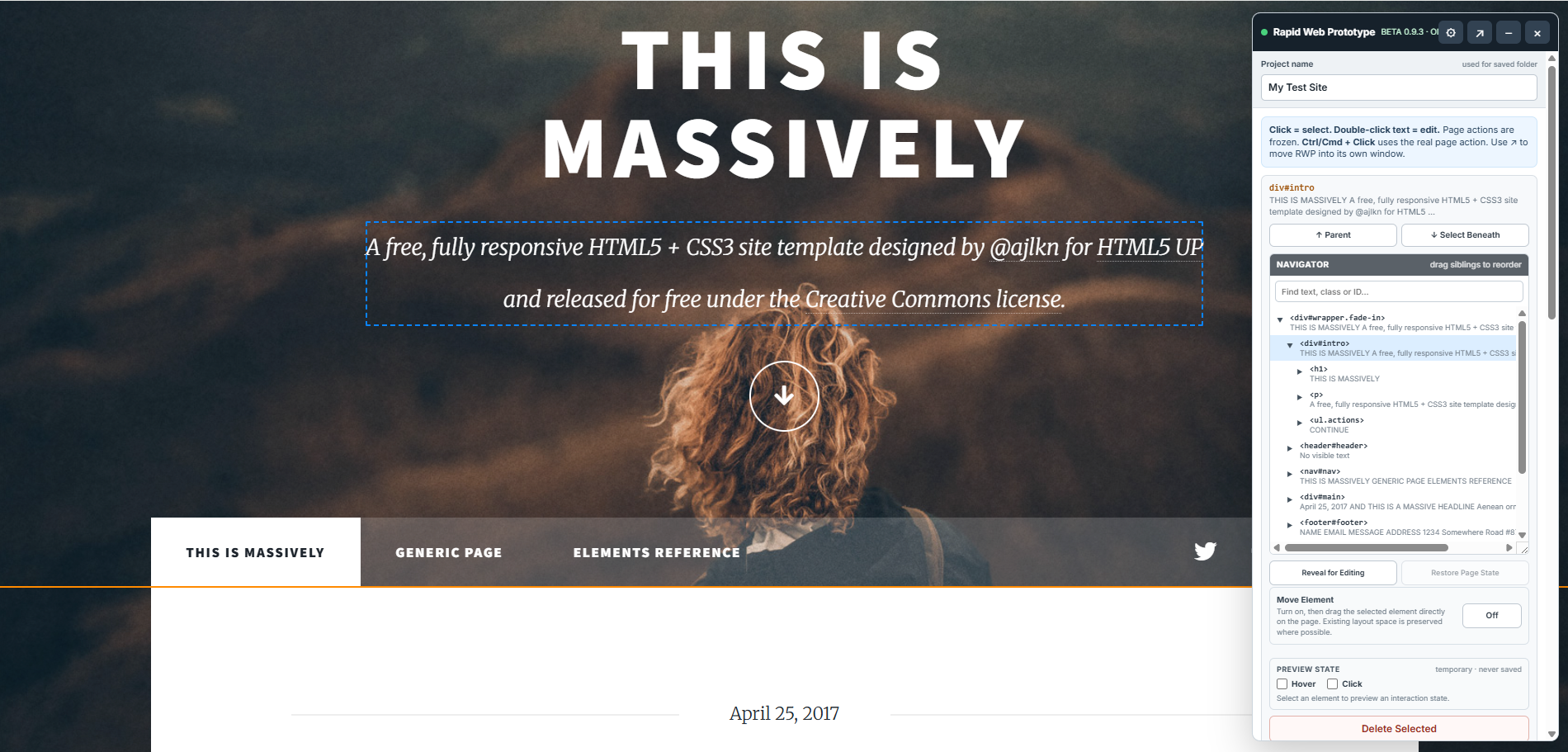
To provide the prototyping features, the extension may read and modify webpage elements in the active browser page while RWP is running. This can include text, images, media URLs, styles, layout information and other page elements you choose to work with.
RWP also stores certain information locally in Chrome so the extension can operate between sessions. Depending on the feature used, this can include:
Saved prototypes and local assets are written to your computer through Chrome's Downloads capability. They are not uploaded to RWP simply because you save them.
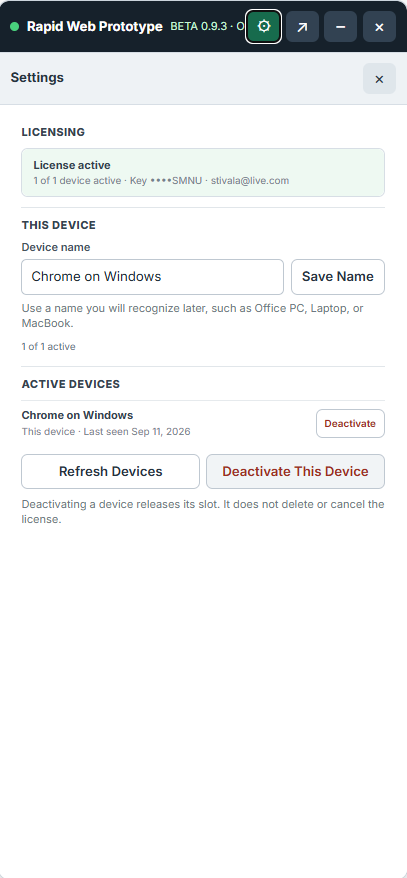
RWP uses a licensing service at license.rapidwebprototype.com to validate trials and paid licenses.
Licensing requests can include:
This information is used to validate access, manage device activations, provide an offline grace period and prevent unauthorized license use.
RWP uses Stripe for subscription billing and hosted subscription management. When you choose Manage Subscription, RWP opens Stripe's secure customer portal in a new browser tab.
RWP does not collect or store your full payment-card number through the extension. Payment information entered into Stripe's hosted pages is handled by Stripe under Stripe's own privacy and security practices.
RWP's billing service may use your installation identifier and application version to create the appropriate Stripe customer-portal session for your subscription.
RWP requests Chrome permissions that are necessary for its core prototyping workflow:
These permissions allow RWP to work across different sites. They are not used to sell browsing information or build an advertising profile.
The RWP extension does not include behavioral advertising or extension-usage telemetry that sends the content of pages you edit to RWP.
Google may provide aggregate Chrome Web Store listing metrics, such as store-page views or installs, under Google's own terms. Those Chrome Web Store metrics are separate from the content you edit with the extension.
RWP does not sell personal information or webpage content to advertisers.
RWP can work with URLs and media that you choose to add to a prototype. For example, you may add a YouTube or Vimeo video, an external image URL or other third-party media. Loading that content may connect your browser to the third-party provider under that provider's own privacy policy.
RWP also relies on:
Information stored locally by the extension generally remains in Chrome until it is replaced, cleared, or the extension/browser data is removed.
Licensing and subscription-related records may be retained for as long as reasonably necessary to provide the service, maintain license and device records, support billing and accounting, prevent abuse, resolve disputes and meet legal obligations.
Prototype files saved to your computer remain under your control and can be deleted using your normal file-management tools.
RWP uses reasonable technical and operational safeguards appropriate to the information it processes. Subscription management is intentionally handled through Stripe's hosted environment rather than being embedded inside RWP.
No method of transmission or storage is completely secure, so absolute security cannot be guaranteed.
This Privacy Policy may be updated as RWP changes. When the policy is materially revised, the effective date at the top of this page will be updated.
If future versions add new analytics, cloud-storage, collaboration or other data-handling features, this policy should be updated before those features are released.
Rapid Web Prototyper was built to solve a real design workflow problem, and feedback from the people using it helps shape what comes next.
Need help or have a question?